The Eternal Brilliance: A Master Guide to Diamond History, Symbolism, and Curation
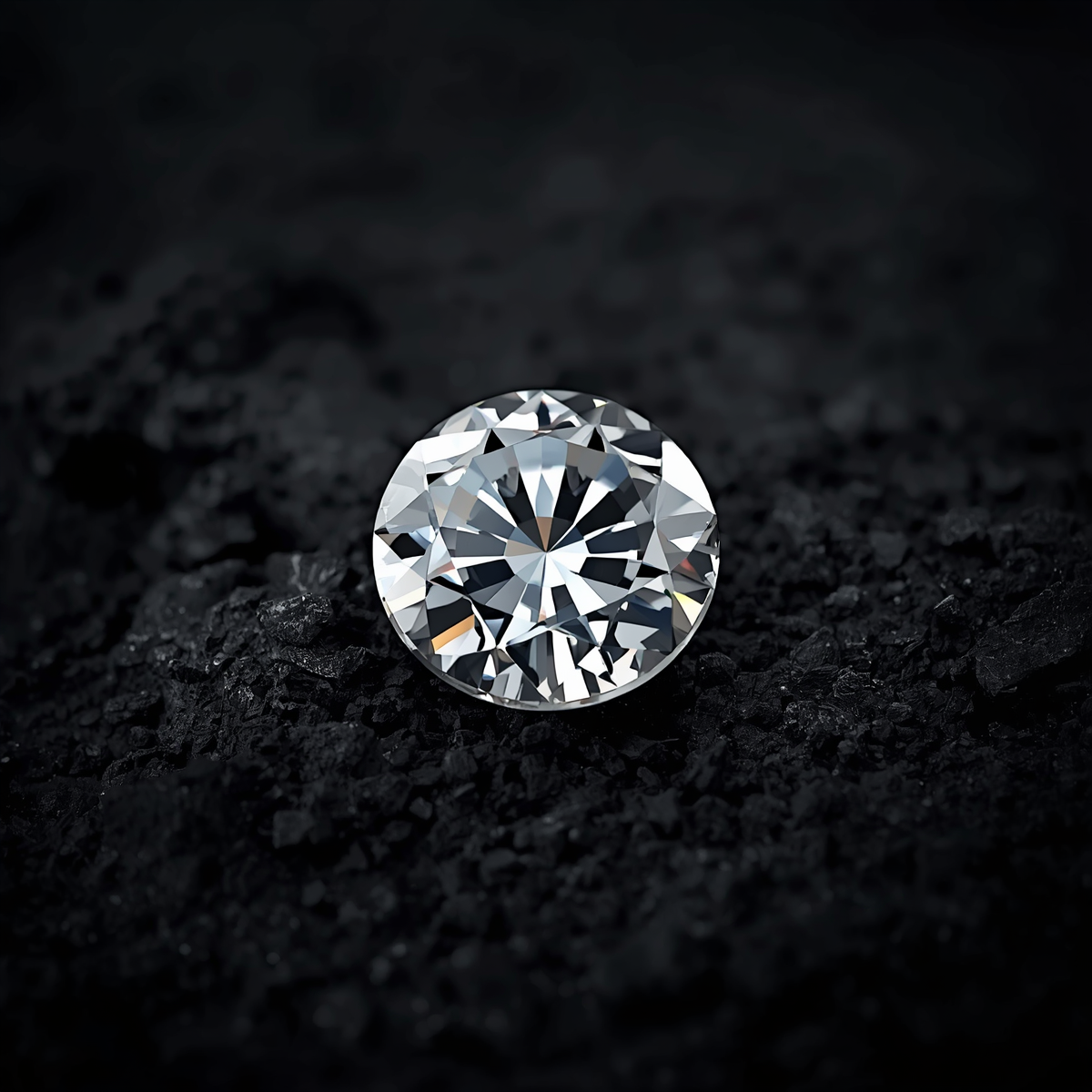
In the world of high jewelry, few elements command the same reverence as the diamond. It is a gemstone that has managed to transcend mere fashion, evolving from a mystical talisman into the ultimate global benchmark for commitment and luxury. At Veyrael, we believe that a diamond is more than a purchase; it is the acquisition of a legacy. To truly appreciate the fire within these stones, one must understand the billions of years of geological pressure and the millennia of human history that have shaped their allure.
Whether you are a first-time buyer seeking an engagement ring or a seasoned collector looking for a statement piece, understanding the provenance and poetry of the diamond is essential to making an informed investment.
From Riverbeds to Royalty: The Ancient Provenance of Diamonds
The story of the diamond does not begin in a boutique; it begins deep within the Earth’s mantle, where carbon is forged under intense heat and pressure over millions of years. For thousands of years, the world’s only source of these treasures was India, where they were first discovered in the riverbeds of the Golconda region around the 4th century BCE.
In these ancient times, diamonds were not cut to sparkle. Instead, they were prized for their sheer, indestructible hardness. The Sanskrit term for diamond is vajra, meaning “thunderbolt,” a nod to the gem’s perceived invincibility and divine origin. To the ancient Greeks, they were adamas—unconquerable—and were often thought to be the tears of gods or fragments of stars fallen to earth.
By the Middle Ages, diamonds were the exclusive domain of monarchs and the clergy, believed to possess the power to ward off evil spirits and even neutralize poisons. It wasn’t until the 15th century that the diamond began its long journey toward becoming the standard for romantic devotion.
The Romantic Pivot: How Diamonds Won Our Hearts
While we often think of the diamond engagement ring as a modern invention, its roots are deep in European history. In 1477, Archduke Maximilian of Austria proposed to Mary of Burgundy with a diamond-set ring in the shape of an “M,” marking the first recorded instance of a diamond used for a betrothal in high nobility.
However, the diamond’s status as a universal symbol of love was truly cemented in the 20th century. In 1947, the De Beers “A Diamond is Forever” campaign transformed the gemstone from a luxury for the elite into a cultural requirement for the middle class. This marketing masterpiece linked the gem’s physical durability to the concept of an unbreakable marital bond, a sentiment that still drives 75% of global proposals today.
For a modern comparison of diamond alternatives, explore Beyond the Brilliance: The Modern Tastemaker’s Guide to Moissanite vs. Diamond.
Deciphering the Language of Diamond Shapes
Diamond Size VisualizerWhen selecting a diamond, the shape is the most immediate expression of personal style. Beyond aesthetics, each cut carries its own historical and symbolic weight:
| Shape | Visual Character | Symbolic Meaning |
|---|---|---|
| Round Brilliant | The gold standard of fire and light. Its 58 facets are engineered to maximize the stone’s natural refraction. | Timelessness and perfection. |
| Emerald Cut | A “hall of mirrors” cut with long, parallel facets that emphasize clarity over raw sparkle. | Sophistication and refined confidence. |
| Princess Cut | A contemporary icon with sharp angles and a square silhouette. | Modern elegance and bold confidence. |
| Pear and Heart Shapes | Fancy cuts that are deeply emotive and visually distinctive. | Joy, romance, and pure sentiment. |
Veyrael’s Expert Buying Guide: Investing with Confidence
Buying a diamond can be a daunting experience, often clouded by industry jargon and high-pressure sales. To avoid overpaying for low-quality stones, the discerning buyer must look beyond the “sparkle” and evaluate the technical reality of the gem.
The 4Cs: Your Technical Roadmap
- Cut: The proportion, shape, and arrangement of facets that determine a diamond’s brilliance, sparkle, and fire.
- Color: The degree to which a diamond appears colorless, graded on the GIA scale from D to Z.
- Clarity: The presence of internal inclusions and external blemishes that affect visual purity.
- Carat Weight: The diamond’s weight, which influences size perception and pricing.
A Quick 4Cs Reference
| C | What It Measures | Buyer Tip |
|---|---|---|
| Cut | How well facets return light. | Prioritize this first for brilliance. |
| Color | How colorless the stone appears. | G-J often gives strong value. |
| Clarity | Inclusions and blemishes. | Eye-clean can save money. |
| Carat | Diamond weight. | Don’t overpay for depth. |
Avoiding the “Luxury Markup” Trap
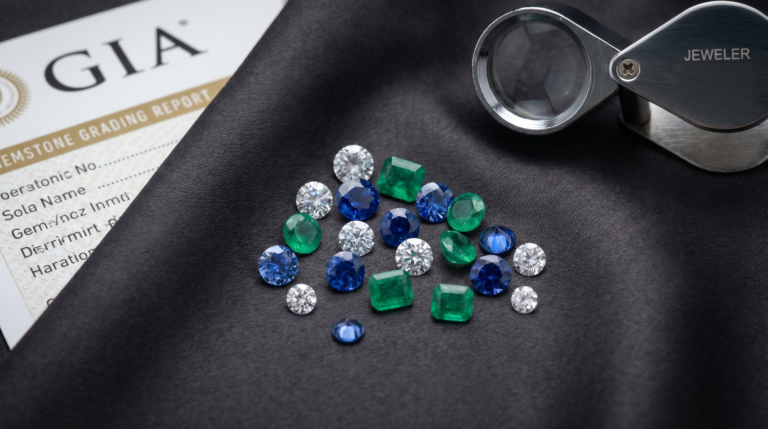
One of the most common mistakes is paying for a brand name rather than the stone itself. Ensure your diamond is accompanied by a third-party grading report (like GIA or IGI) to verify its quality independently of the jeweler’s claims. Additionally, consider the setting: 14k gold or platinum can dramatically influence the “face-up” color of your stone, allowing you to choose a slightly lower color grade and save thousands.
The Modern Frontier: Natural vs. Lab-Grown
The modern buyer faces a new choice: the natural diamond or the lab-grown alternative.
| Type | Key Strength | Buyer Profile |
|---|---|---|
| Natural Diamonds | Celebrated for rarity and geological story. | Collectors and buyers who value finite origin. |
| Lab-Grown Diamonds | Chemically and physically identical to mined stones. | Value-focused buyers prioritizing transparency and sustainability. |
Natural Diamonds are celebrated for their rarity and “geological story.” They are considered finite treasures and often hold their value better for collectors and investors.
Lab-Grown Diamonds are chemically and physically identical to mined stones but are created in controlled environments. They are often 30-50% more affordable and appeal to those prioritizing ethical transparency and environmental sustainability.
The choice ultimately depends on your values. Are you looking for a miracle of nature that took billions of years to form, or a modern marvel of science that offers ethical peace of mind?.
Beyond the Ring: Building a Diamond Wardrobe
While engagement rings dominate the conversation, diamonds are versatile enough for every facet of life:
- The Tennis Bracelet: Popularized by Chris Evert in 1987, this symmetrical line of diamonds is a staple of “everyday luxury”.
- Diamond Studs: The most versatile accessory a person can own, perfect for transitioning from a boardroom to a gala.
- Pendants: An understated diamond pendant suggests “timeless perfection” and serves as an ideal gift for major milestones.
To understand ethical sourcing in today’s market, see Beyond the Sparkle: The Veyrael Masterclass on Ethical Diamond Procurement.
Conclusion: A Legacy in Every Facet
Diamonds remain unmatched in their ability to capture both light and human emotion. When you choose a diamond, you are participating in a tradition that spans from the riverbeds of ancient India to the modern ateliers of the world’s great designers. By understanding the history, mastering the 4Cs, and choosing a stone that aligns with your personal values, you ensure that your purchase isn’t just a piece of jewelry—it’s a brilliant piece of history you can wear.
Frequently Asked Questions
Why are diamonds the traditional choice for engagement rings? Their unmatched hardness (a 10 on the Mohs scale) serves as a metaphor for an unbreakable, eternal bond.
Is a lab-grown diamond a “real” diamond? Yes. Lab-grown diamonds have the exact same chemical, physical, and optical properties as mined diamonds.
What is the most important “C” when buying? Most experts agree that Cut is the most critical factor, as it determines the diamond’s brilliance and ability to hide imperfections.
How can I tell if a diamond is high quality? Always request a GIA or IGI grading report. This provides a scientific, unbiased assessment of the stone’s 4Cs.